
No matter how much you brush and floss, dental problems can still arise! Teeth and gums have little crevices that are hard to reach and accidents happen that can chip or crack teeth. Additionally, healthy teeth and gums contribute to your overall health! Because of these reasons and more, dentistry is an important part of taking care of your health and well-being.
Although the art of dentistry began around 1760, the crown, then called a “jacket,” wasn’t developed until 1903. In the meantime, many advancements in all areas of dentistry and orthodontia have continued to be made. In fact, there are many types of dental procedures today. Almost everyone has had at least one dental procedure performed from simple teeth cleaning to complicated dental surgery. With each procedure, there are often a number of options to choose from before you and your dentist decide on a treatment plan. One dental procedure that is very common is the crown.
But, which type of tooth crown is best? Read on to find out more!
What is a Crown?
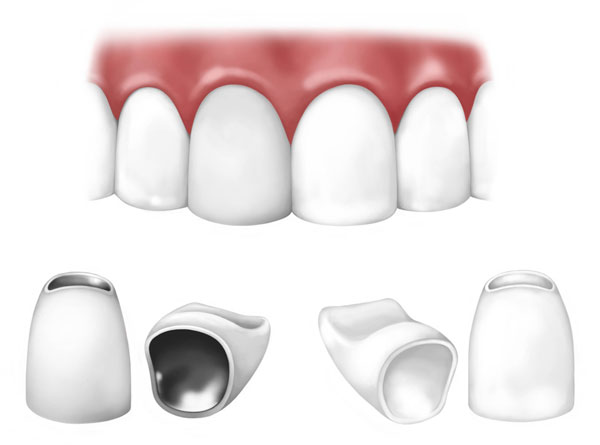
You’re likely already familiar with the term “crown” relating to dental procedures. If you’re not familiar with the term “crown,” crowns are very common dental procedures wherein your dentist makes a covering to fit over a broken or damaged tooth. Some people request crowns for purely cosmetic reasons to cover an unsightly tooth, though others need them to support a dental bridge. Crowns are used for both children and adults. There are several types of crowns that are used, each with its own advantages and disadvantages.
Types of Crowns
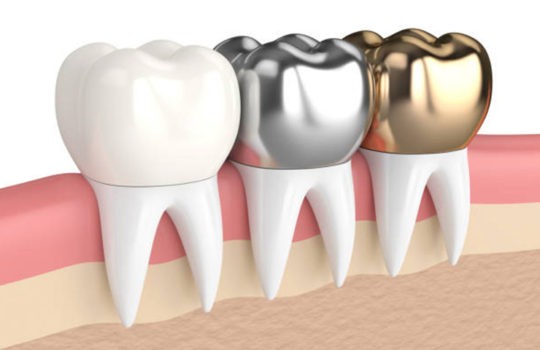
There are several types of crowns that are used in dental procedures:
- Metal Crowns
- Porcelain Crowns or Ceramic Crowns
- Resin Crowns
- Porcelain fused with Metal Crowns
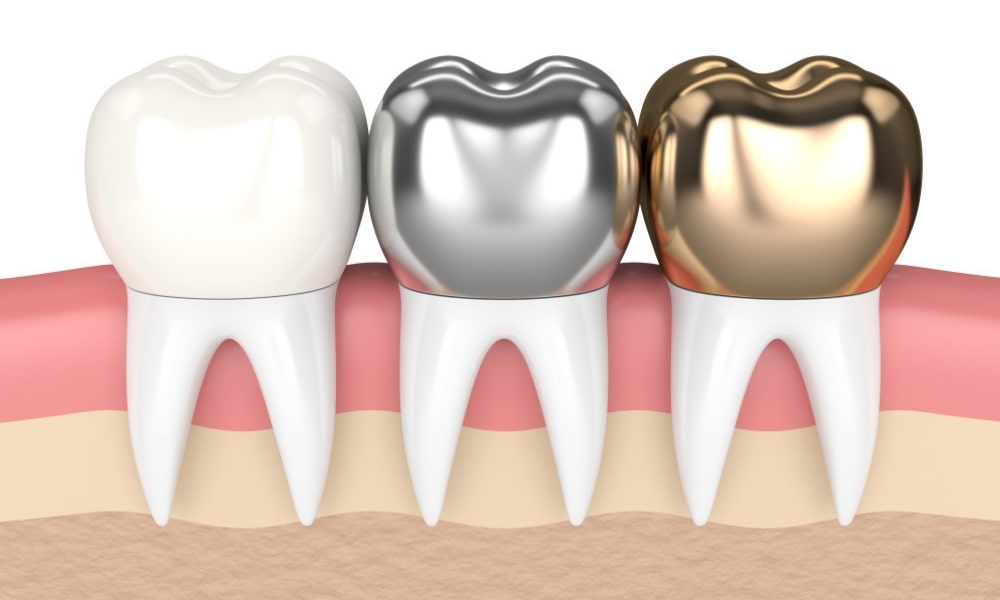
Metal crowns are extremely durable and long-lasting. They are usually made from an alloy metal that contains nickel. Silver and gold used to be more commonly used, but today are rare. Because metal isn’t the same color as natural teeth it is usually only used for crowns in the back of the mouth. Metal crowns can also cause damage to the teeth around them.
Ceramic and porcelain crowns are more expensive than metal, but they look more natural and can be shaded to match the surrounding teeth. However, ceramic and porcelain crowns are not as durable as metal and can chip or crack, resulting in having to be replaced.
Crowns can also be made with resin. It is less expensive than porcelain or ceramic but looks more natural than metal, although resin is more fragile than porcelain or ceramic and is likely to have to be replaced.
Another option is porcelain that is fused with metal resulting in significant strength and durability. However, because the porcelain can erode with time, the metal may eventually begin to show through or at the edge of the porcelain.
How to Determine Which Type of Tooth Crown is Best for You?
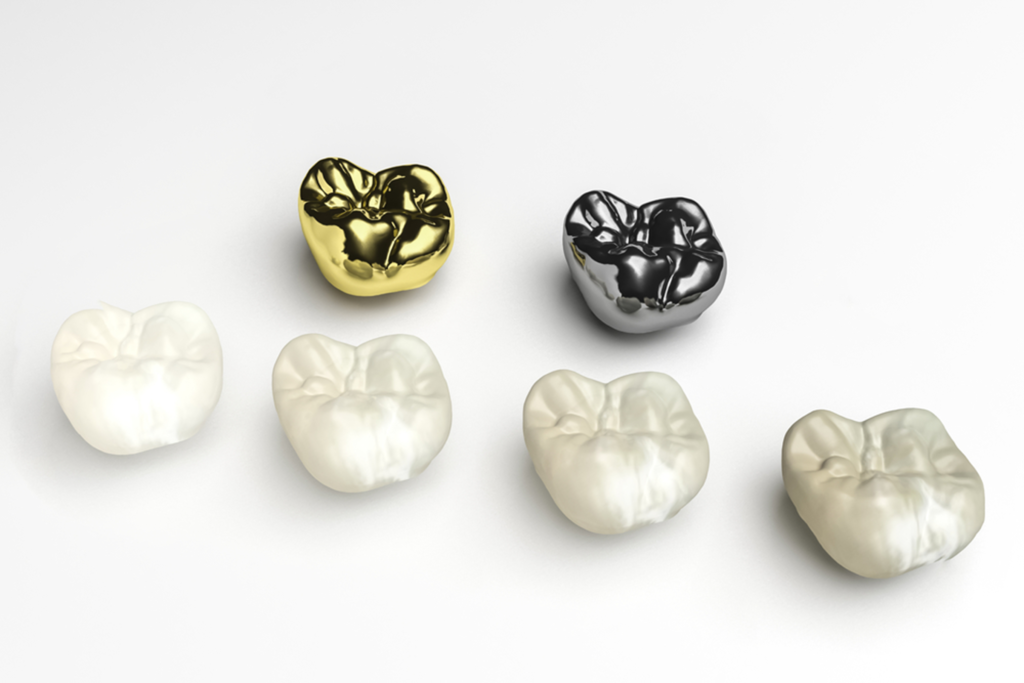
First and foremost, like many things in life, choosing a type of tooth crown isn’t one-size-fits-all. Durability is certainly a significant factor. Metal crowns are absolutely the most durable whereas porcelain, ceramic, and resin are less so. Non-metal crowns aren’t as durable, but they are the most natural-looking. The location of the crown often is a big determinant for which type of crown is best. For example, a back molar would be better served by a metal crown because most of your chewing is done with your back teeth and it won’t be seen so you don’t have to worry about it being a different color. Cost is certainly a huge factor for most of us. Metal and resin are less expensive, while porcelain and ceramic are more expensive. Taking these factors into consideration, hopefully, you feel more comfortable making the choice that works best for you!