Blog

How Much Does a Full Set of Quality Dentures Cost?

From a young age, we’re taught that taking care of our teeth is very important. As we get older and encounter various oral procedures or problems, just how important our teeth become even more apparent. Perhaps as a teenager, we have braces and at some point, that first cavity comes along – both teaching us that tooth care never stops. Eventually, we may come to a point in life where we begin to think about needing dentures because just like everything else our teeth get older too! Generally, most of us are aware that dentures can be expensive, but how much do they really cost? 

Factors that Determine Cost

The first thing to consider is that there are different types of dentures – full or partial, economy or custom, type of materials used, and so on. You also have to consider procedures that may need to be done prior to being able to use dentures – such as extractions. You may need temporary dentures while you’re permanent set is being made and you may need follow-up appointments to make adjustments.
types of dentures

Types of Dentures

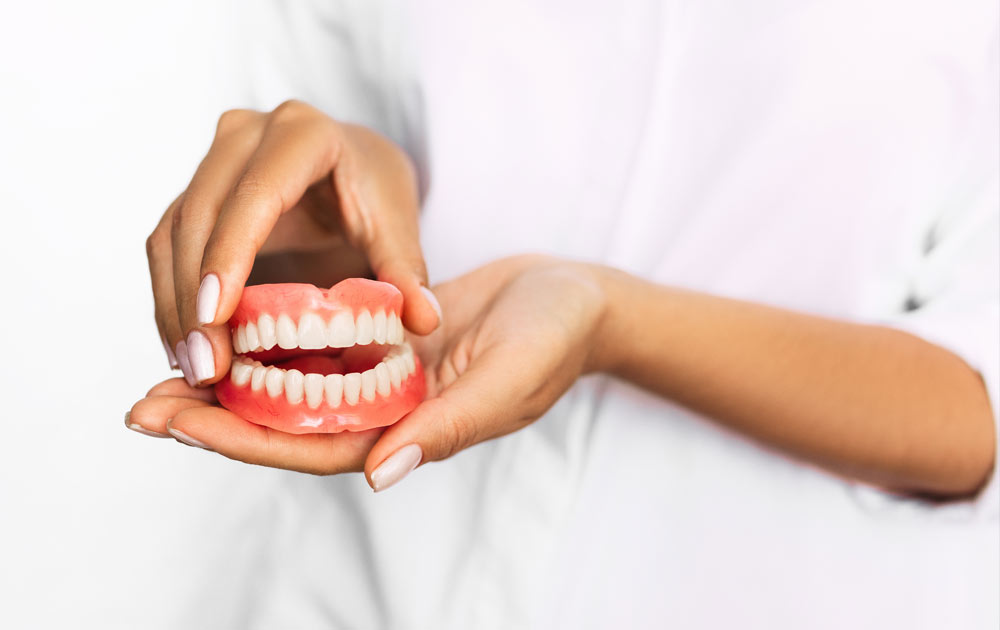
The biggest cost determinant is the type of dentures you choose and there are several factors to consider. The first determinant is whether you’re getting full or partial dentures. Obviously, there is a significant difference in cost between the two as partial dentures would only cover the upper or lower portion of your mouth whereas the full dentures would cover both the upper and lower. 

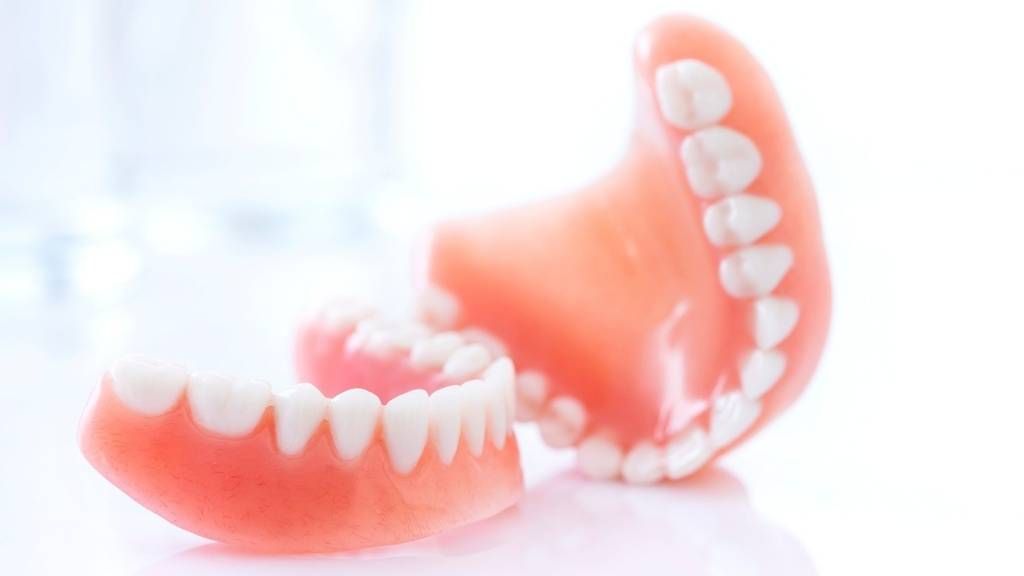
The second determinant to consider is the materials that are used to make the dentures. Dentures can differ significantly in look and feel based on the materials. For example, an economy or budget set of dentures may not look and feel as real as a more expensive, customized set. Customized dentures are molded to fit your gums more comfortably and have many gum and tooth shades available to look more natural. Some dentures must be removed, clean, and have adhesive applied regularly, whereas others can be secured with metal implants so they don’t move and function more like natural teeth. 
dentures san diego

So How Much Does a Full Set of Quality Dentures Really Cost? 

Now that you have an idea of why there are differences in the prices of dentures, you’re certainly wanting to know real numbers, right? Let’s break it down – these figures are regarding full sets of dentures. 

  • Economy, or Basic, Dentures usually begin around $600 to $1,000. 
  • Mid-range Dentures usually begin around $1,000 to $3,000.
  • Premium Dentures usually begin around $4,000 to $8,000. 

Other costs to consider include: 

  • Extractions of remaining teeth usually cost around $75 to $450 per tooth, or more if a surgical extraction is necessary. 
  • Dental implants to support dentures vary widely but generally begin around $3,500 for two to six implants (the amount usually needed to support denture plates). 

Assuming you’re considering dentures because your dentist believes them to be medically necessary and you have dental insurance, your plan likely covers a portion of the cost of dentures. You will have to check with your individual insurance provider to find out for sure, but that could be a significant help in the total cost. 

Yes, dentures can be expensive, but consider dentures an investment in your dental and overall health. Being able to eat is a basic necessity of life and dentures can help you retain that functionality. Additionally, having a full set of straight, white teeth can also improve your well-being and mental health by giving you more confidence and encouraging you to smile. Call us for a consultation today! 
 

Which Type of Tooth Crown is Best?

No matter how much you brush and floss, dental problems can still arise! Teeth and gums have little crevices that are hard to reach and accidents happen that can chip or crack teeth. Additionally, healthy teeth and gums contribute to your overall health! Because of these reasons and more, dentistry is an important part of taking care of your health and well-being. 

Although the art of dentistry began around 1760, the crown, then called a “jacket,” wasn’t developed until 1903. In the meantime, many advancements in all areas of dentistry and orthodontia have continued to be made. In fact, there are many types of dental procedures today. Almost everyone has had at least one dental procedure performed from simple teeth cleaning to complicated dental surgery. With each procedure, there are often a number of options to choose from before you and your dentist decide on a treatment plan. One dental procedure that is very common is the crown. 

But, which type of tooth crown is best? Read on to find out more!

types of dental crowns

What is a Crown? 

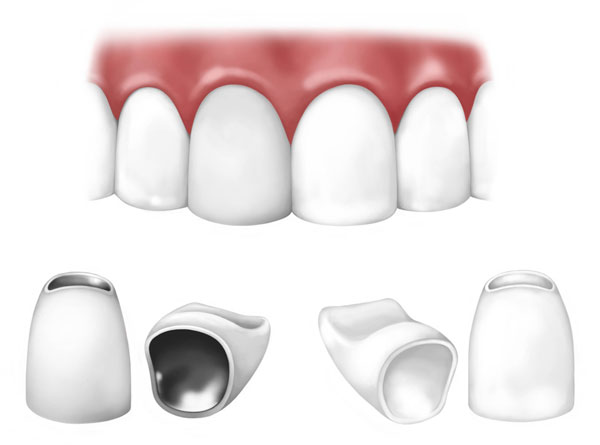
You’re likely already familiar with the term “crown” relating to dental procedures. If you’re not familiar with the term “crown,” crowns are very common dental procedures wherein your dentist makes a covering to fit over a broken or damaged tooth. Some people request crowns for purely cosmetic reasons to cover an unsightly tooth, though others need them to support a dental bridge. Crowns are used for both children and adults. There are several types of crowns that are used, each with its own advantages and disadvantages. 

dental crowns san diego

Types of Crowns

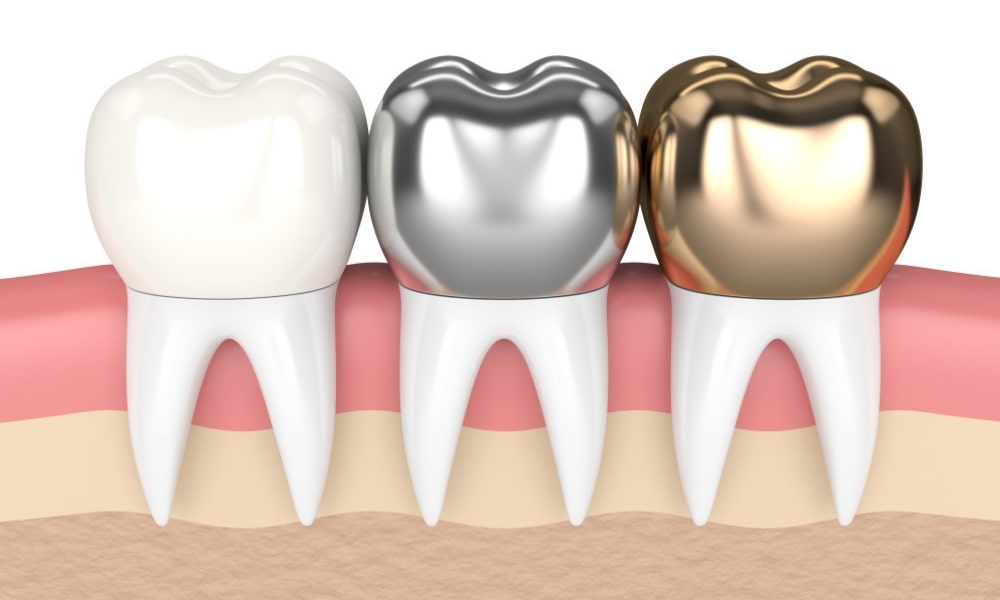
There are several types of crowns that are used in dental procedures: 

  • Metal Crowns
  • Porcelain Crowns or Ceramic Crowns
  • Resin Crowns
  • Porcelain fused with Metal Crowns

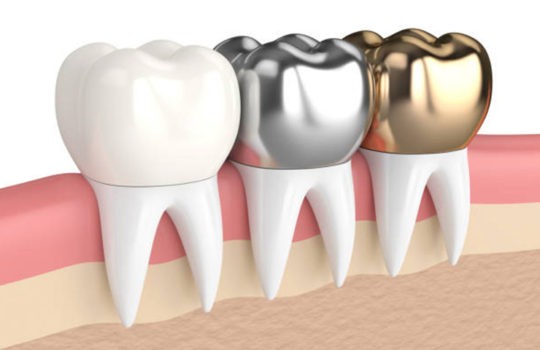
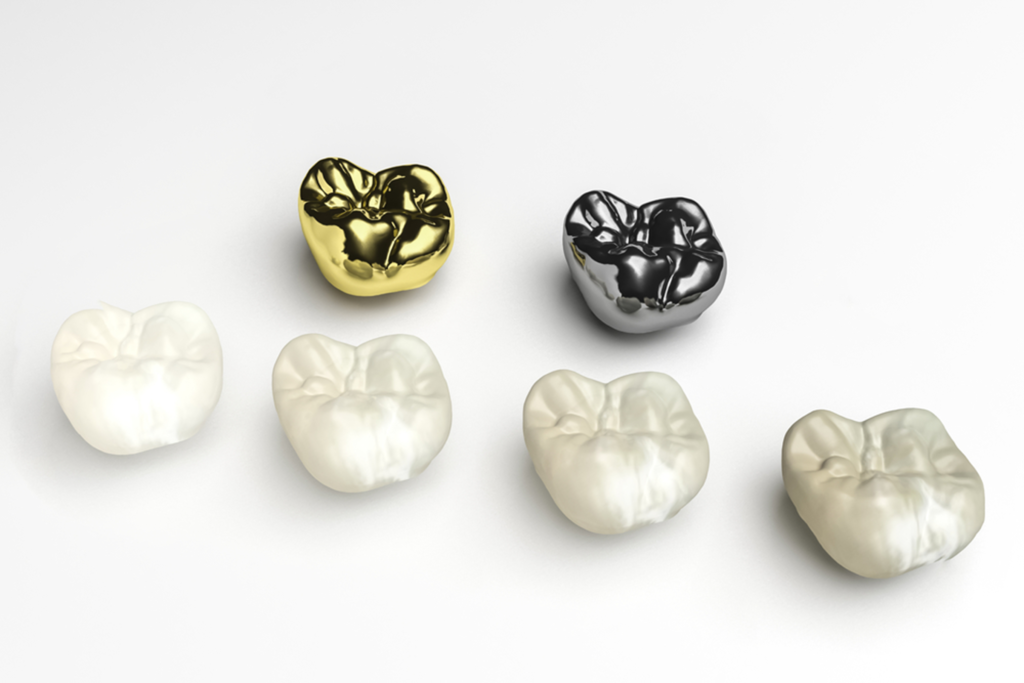
Metal crowns are extremely durable and long-lasting. They are usually made from an alloy metal that contains nickel. Silver and gold used to be more commonly used, but today are rare. Because metal isn’t the same color as natural teeth it is usually only used for crowns in the back of the mouth. Metal crowns can also cause damage to the teeth around them. 

Ceramic and porcelain crowns are more expensive than metal, but they look more natural and can be shaded to match the surrounding teeth. However, ceramic and porcelain crowns are not as durable as metal and can chip or crack, resulting in having to be replaced. 

Crowns can also be made with resin. It is less expensive than porcelain or ceramic but looks more natural than metal, although resin is more fragile than porcelain or ceramic and is likely to have to be replaced. 

Another option is porcelain that is fused with metal resulting in significant strength and durability. However, because the porcelain can erode with time, the metal may eventually begin to show through or at the edge of the porcelain. 

types of dental crowns

How to Determine Which Type of Tooth Crown is Best for You? 

First and foremost, like many things in life, choosing a type of tooth crown isn’t one-size-fits-all. Durability is certainly a significant factor. Metal crowns are absolutely the most durable whereas porcelain, ceramic, and resin are less so. Non-metal crowns aren’t as durable, but they are the most natural-looking. The location of the crown often is a big determinant for which type of crown is best. For example, a back molar would be better served by a metal crown because most of your chewing is done with your back teeth and it won’t be seen so you don’t have to worry about it being a different color. Cost is certainly a huge factor for most of us. Metal and resin are less expensive, while porcelain and ceramic are more expensive. Taking these factors into consideration, hopefully, you feel more comfortable making the choice that works best for you!

Your Trusted Dentist in Chula Vista with Emergency and Urgent Care

Chula Vista Emergency Dentist

In order to trust the Chula Vista dentists with emergency and urgent care, you need to first know what they consider an emergency to be.

We’re going to clear a few small things up in this article by defining what a dental emergency is, by providing the most common dental emergency, and by showing you how to potentially prevent a dental emergency. We want you to feel safe, and covering all the bases will help get you to a secure place with your teeth today.

Without further ado, let’s get right into the topic at hand.

What is a Dental Emergency?

Emergency dental care

Dental emergencies cannot wait for a regular checkup appointment; they need immediate attention. Even still, there are so many types of dental emergencies, and they all range in severity.

Some of the most common include:


  • Tooth decay and pain associated with it
  • A lodged object between the teeth
  • A lodged object in the gums
  • Damage to some of the soft tissues of the mouth
  • Broken teeth
  • Chipped teeth
  • Knocked-out teeth
  • Abscess

Whatever the case may be, Chula Vista can offer urgent care for immediate emergency relief. Trust our dentists with your mouth care health and we can assure you, you won’t regret it.

What’s the Most Common Emergency?


Believe it or not, that’s an easy one. Getting a tooth knocked-out is the absolute most common emergency.

What we want to do is prepare you before you do the wrong thing. Treating a knocked-out tooth might seem like common sense, but many people don’t understand the simple procedures they need to do before going to the dentists’ office to make sure that tooth is still good and fixable. What we want is to save the tooth, not lose it.

Before you go to the dentist, be sure to locate the knocked-out tooth and immediately rinse it off with cool water to get any particles off of it. DO NOT wipe the tooth or apply any sort of pressurized water to it, as the knocked-out tooth does still have living cells on the tooth root, and getting rid of those won’t bode well when the dentist goes to fix your knocked-out tooth.

If you can, also be sure to put the tooth back in its socket. You can easily do this by biting gently down on a piece of gauze to hold the tooth where it’s supposed to be. If you don’t want to do that, simply put the tooth in the space between your gums and cheek to ensure the tooth root cells stay alive. If you still don’t want to do that, it’s ok to put the tooth in a small container covered in milk until you arrive at the dentists’ office.

Once this process is complete, immediately set up an emergency visit with your local dentist at Chula Vista; these experts will take good care of you and do everything in their power to make sure that tooth is salvageable.

How to Prevent a Dental Emergency

A lot of dental emergencies can’t actually be prevented, but there are some steps you can take to definitely keep yourself away from certain dreadful circumstances.

First things first, always schedule regular dental visits. That way, you might be able to get ahead of an impending injury. The dentist can check on tooth decay and other painful instances while you’re in the office.

Also, if you’re playing sports or doing any type of dangerous physical activity, protect those pearly whites from harm and wear the appropriate protective gear, like mouth guards.

If you’re grinding your teeth at night, harmful dental side effects may ensue. Talk to your dentist about purchasing a night guard that fits very well to omit all types of night grinding.

At the end of the day, be careful and always take care of an emergency as soon as it happens. Our dentists over in Chula Vista are just a phone call away. So, pick up the ringer and dial in to ask any questions and schedule your first visit!